
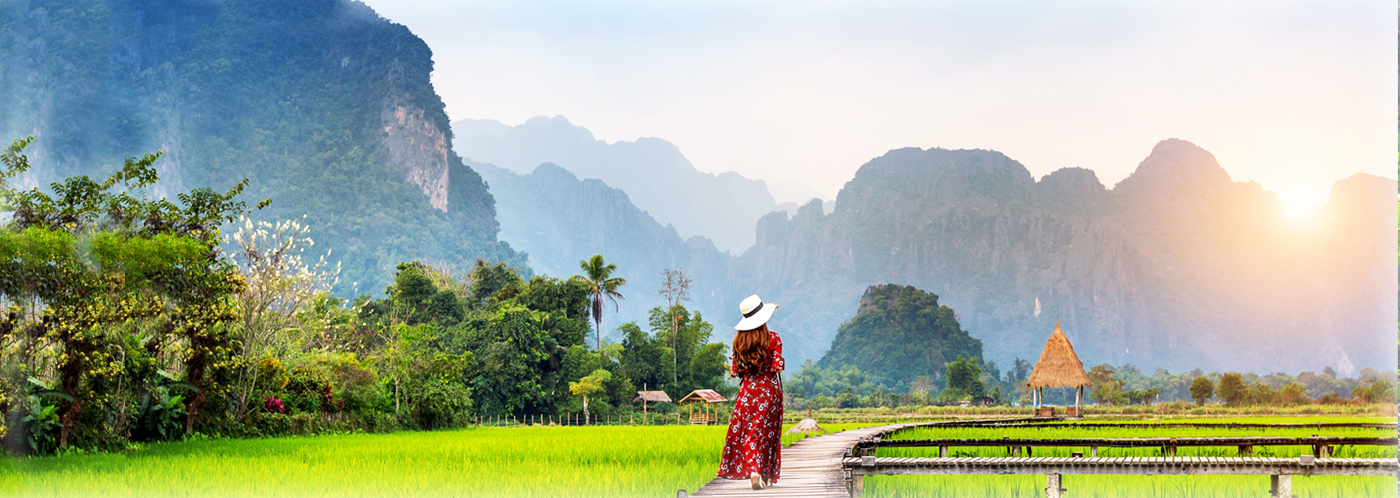
The Sacred Peak of Yen Tu: A Journey into Vietnam’s Spiritual Heart

A Mountain of Legend
For centuries, the name Yen Tu has been spoken with reverence across Vietnam. It appears in folk verses and Buddhist chants, immortalized in a saying:
“A hundred years of monastic practice,
Yet without setting foot on Yen Tu, enlightenment is incomplete.”
Located in Quang Ninh Province, Yen Tu is not only a mountain—it is the spiritual cradle of Vietnamese Buddhism. Here, King Tran Nhan Tong, who abdicated his throne in the 13th century, renounced worldly power to become a monk and founded the Truc Lam Zen sect. Today, pilgrims and travelers alike journey to Yen Tu to follow in the footsteps of a king who became a Buddha.
Tracing the First Steps
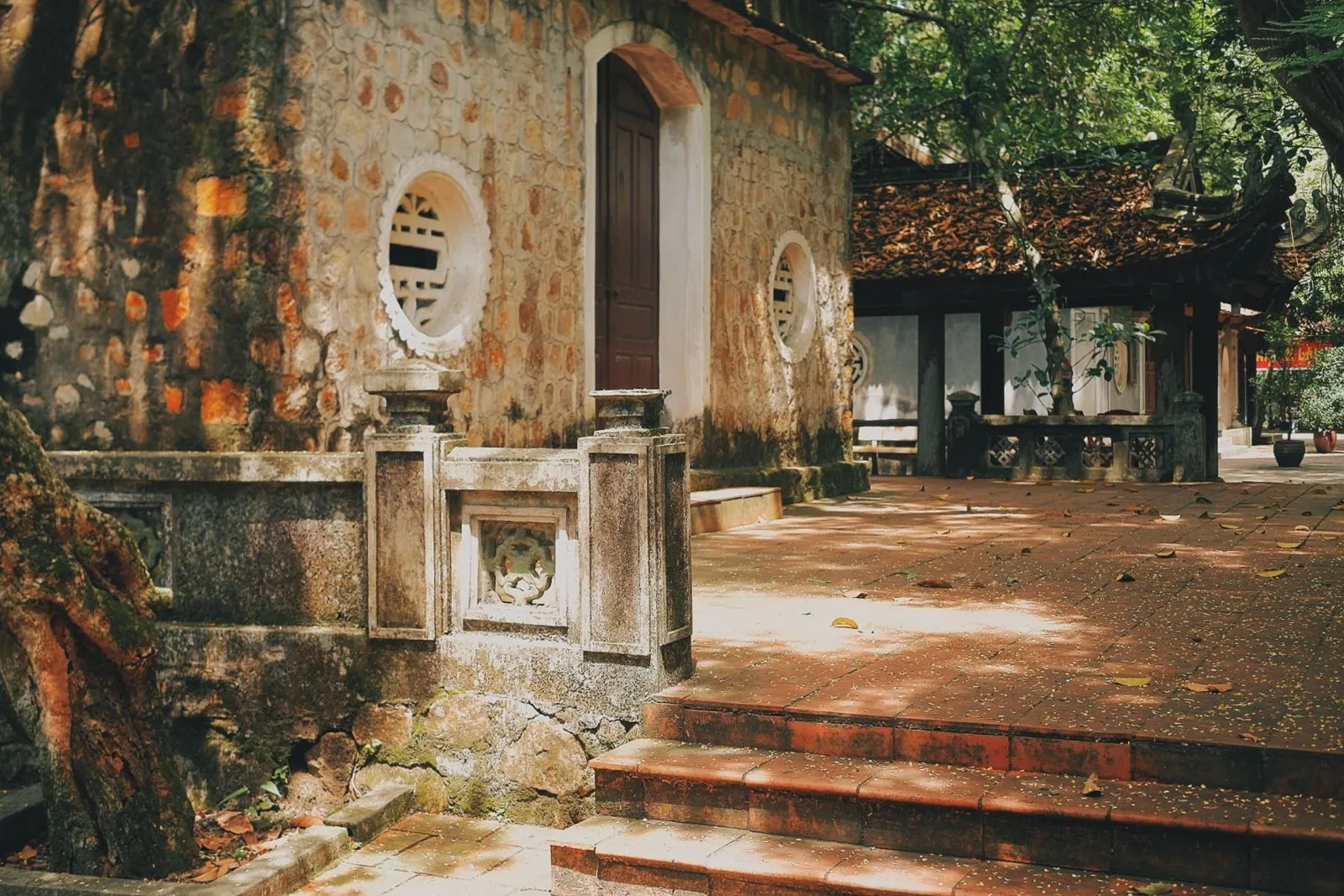
The journey begins about 20 kilometers from Uong Bi City. The road winds past the serene Yen Trung Lake before leading into the foothills. Hidden under ancient trees lies Suoi Tam Pagoda, a small shrine beside a cool mountain stream where, legend says, King Tran once bathed before his retreat into the mountains.
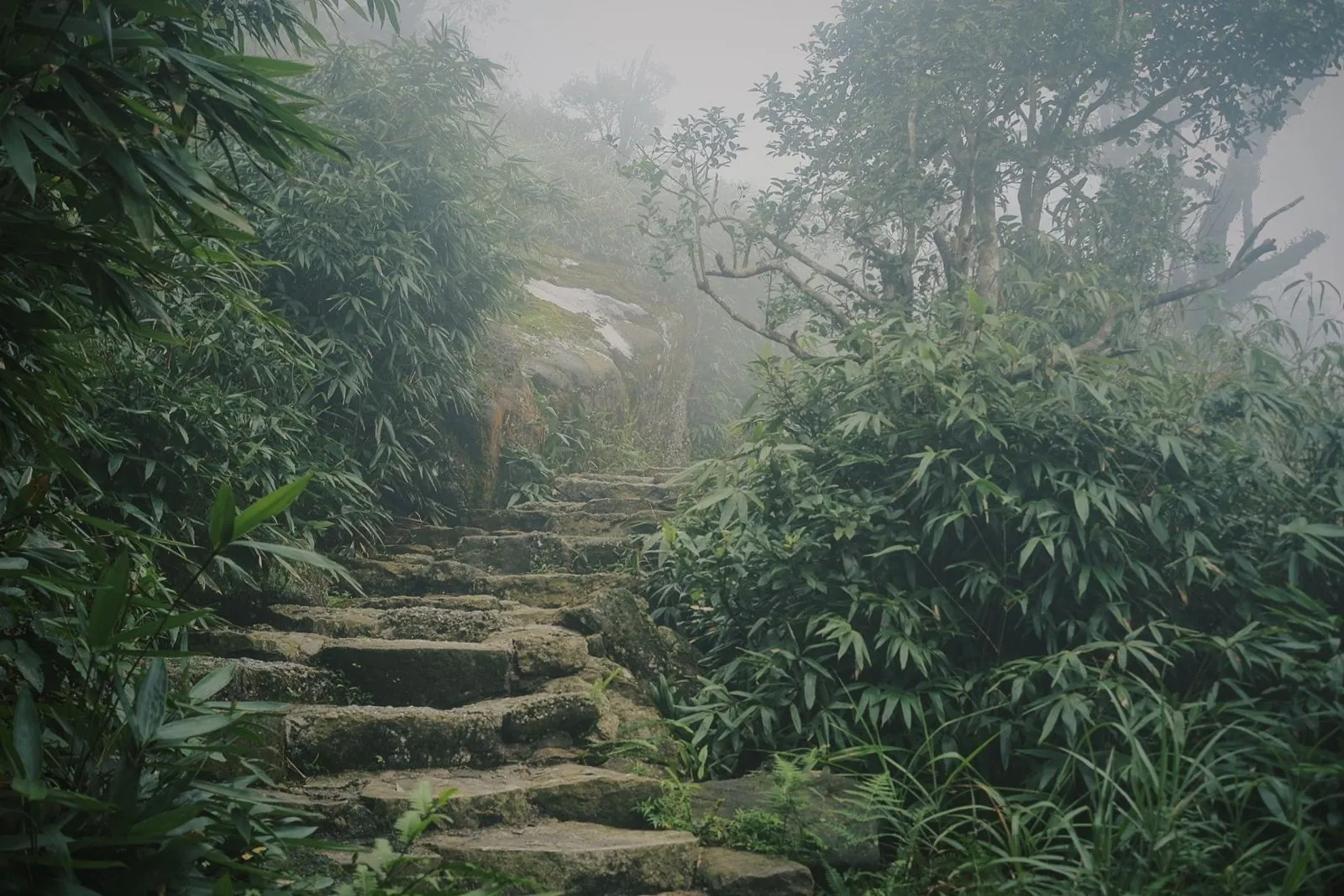
The mossy stone steps, the fragrance of grapefruit blossoms, and the quiet temple nestled in the forest seem untouched by time. More than seven centuries later, the sacred stillness remains.
Into the Sacred Mountains
From there, the road climbs into the Yen Tu range. Rising 1,068 meters, the mountain is cloaked in forest and mist, with pagodas clinging to cliffs and towers peeking through the clouds.
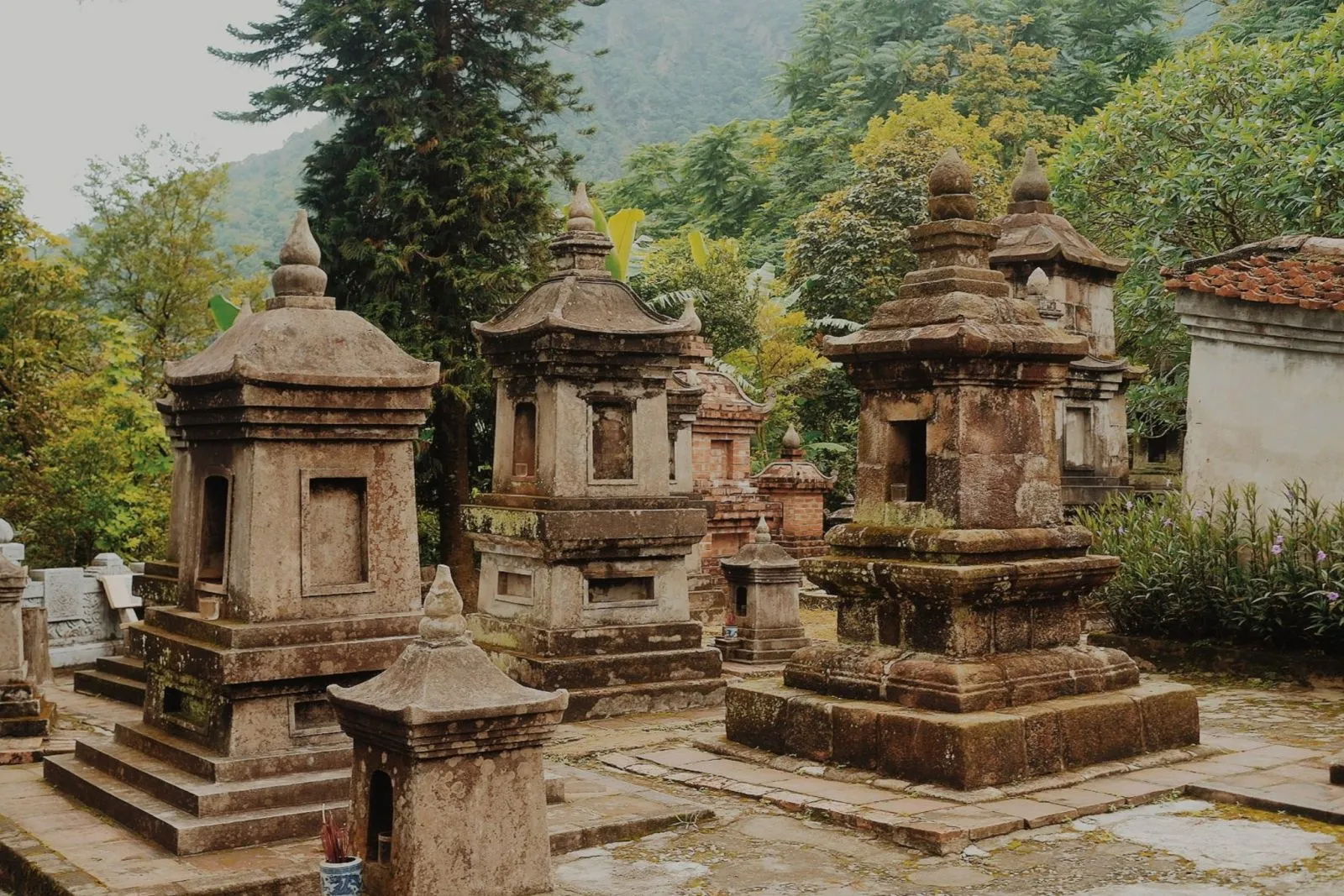
Instead of the modern cable car, I chose the traditional way: climbing by foot. My hike began at Giai Oan Pagoda, said to honor palace maids who sacrificed themselves to dissuade their king from leaving for a monastic life. From there, stone steps lead upward past Am Lo Ren, the thousand-year-old Tung Forest, and finally to Hue Quang Tower, which enshrines the relics of King Tran Nhan Tong.
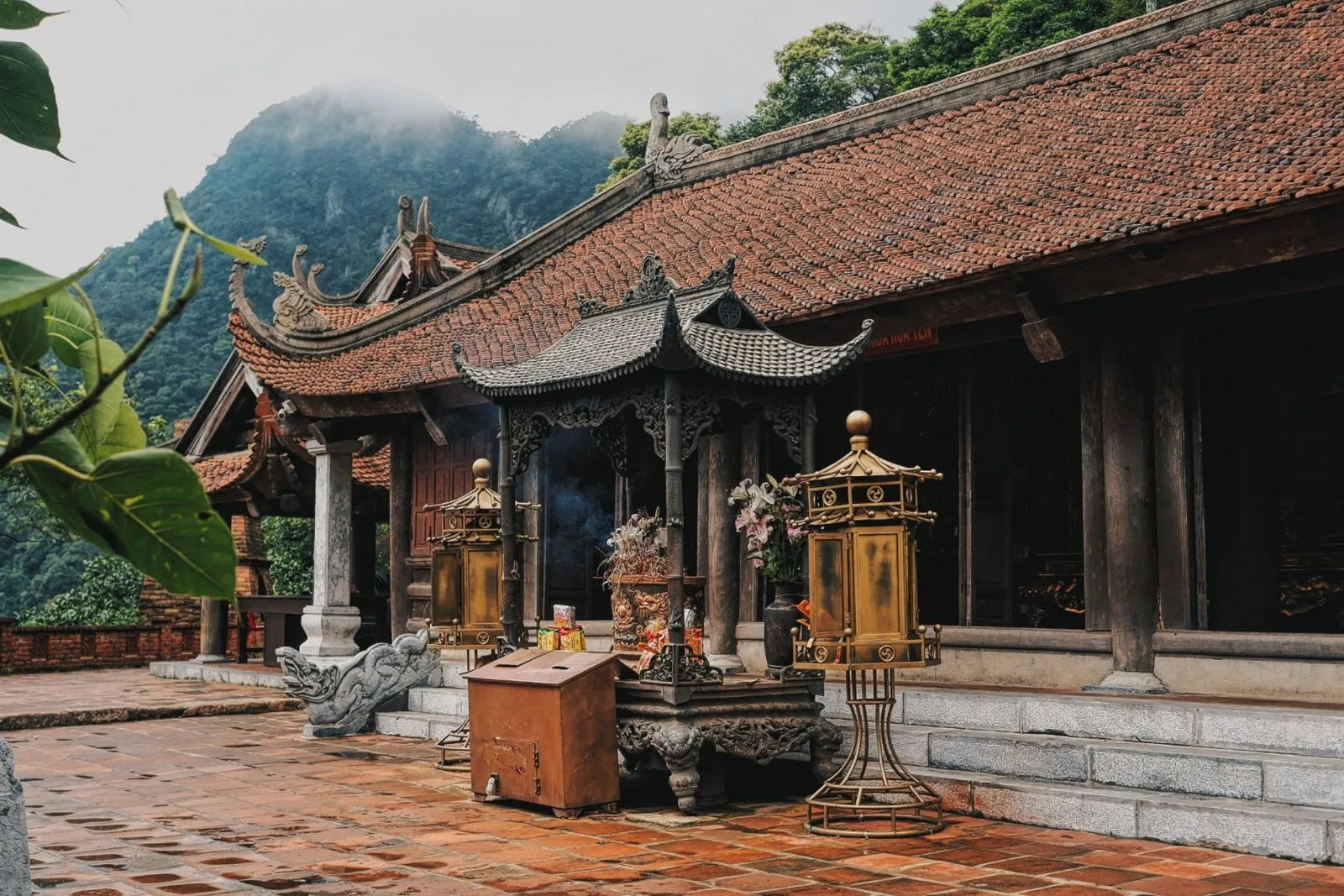
Nearby lies Hoa Yen Pagoda, once the main monastery of the Truc Lam sect. Surrounded by ancient trees and mountain mist, it still holds the quiet dignity of a sacred site where emperors once meditated. Sitting there, with the vast ranges rolling into the horizon, I understood why so many seekers came to this mountain for peace and enlightenment.
The Half-Roofed Pagoda
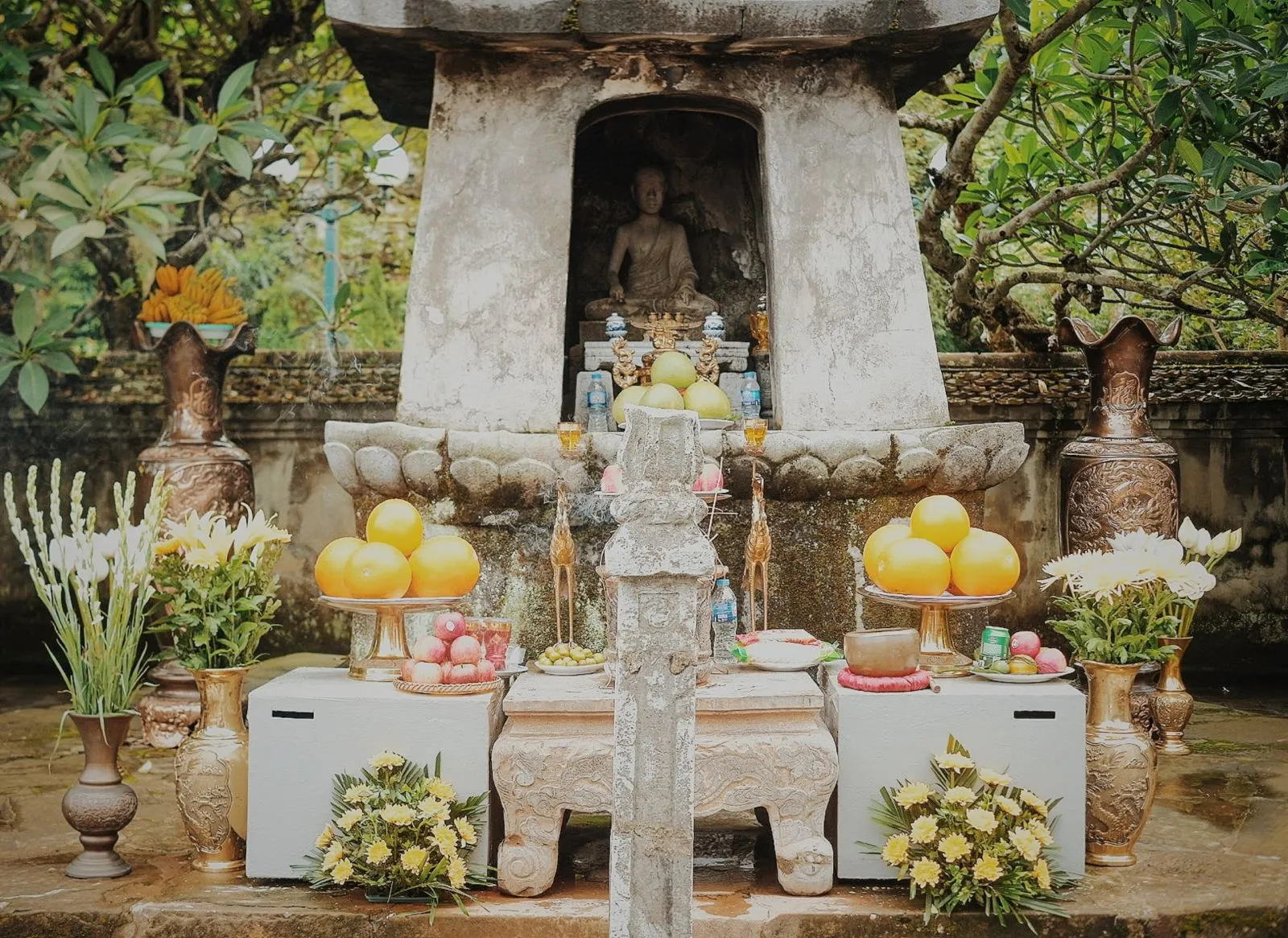
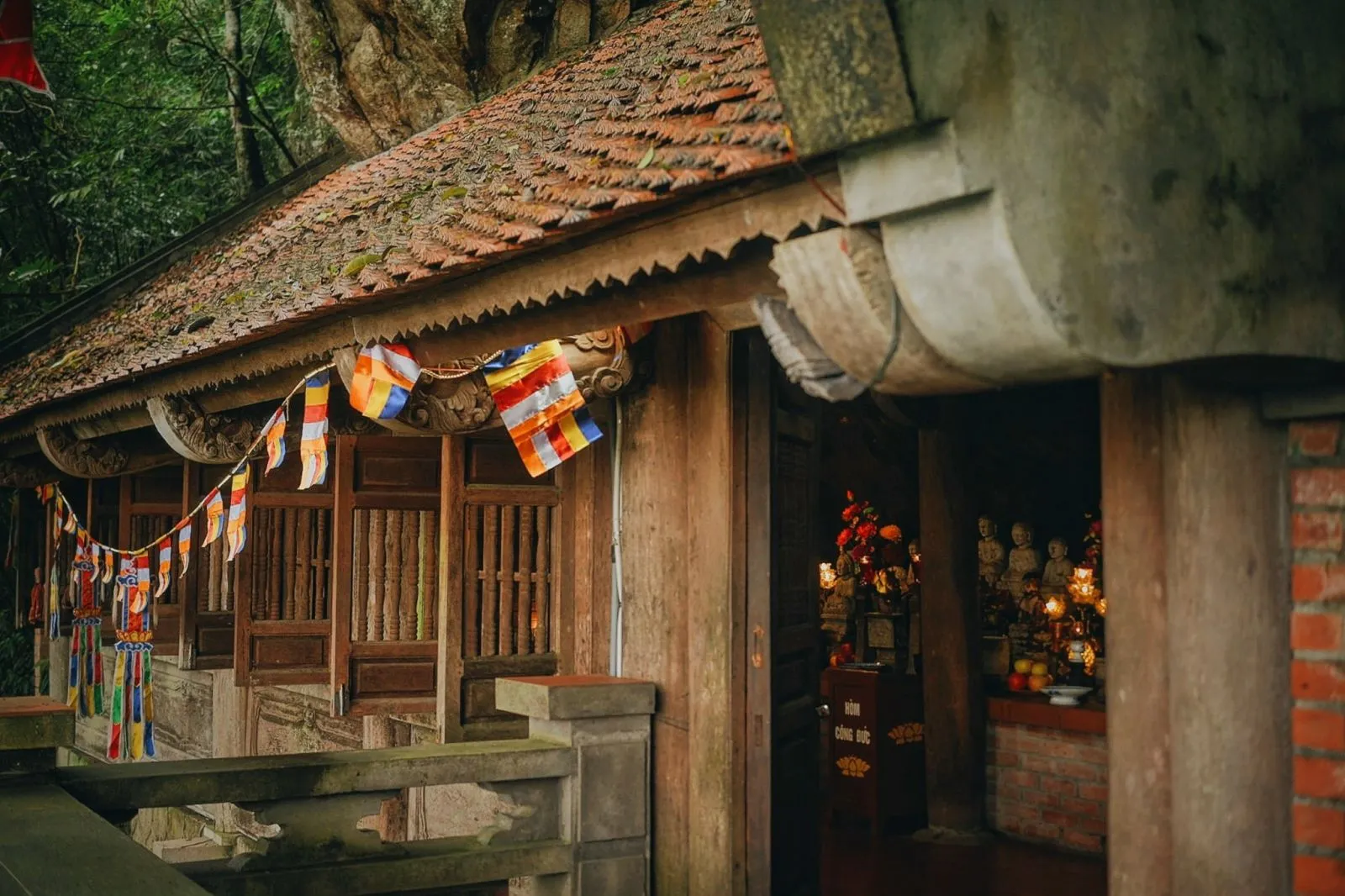
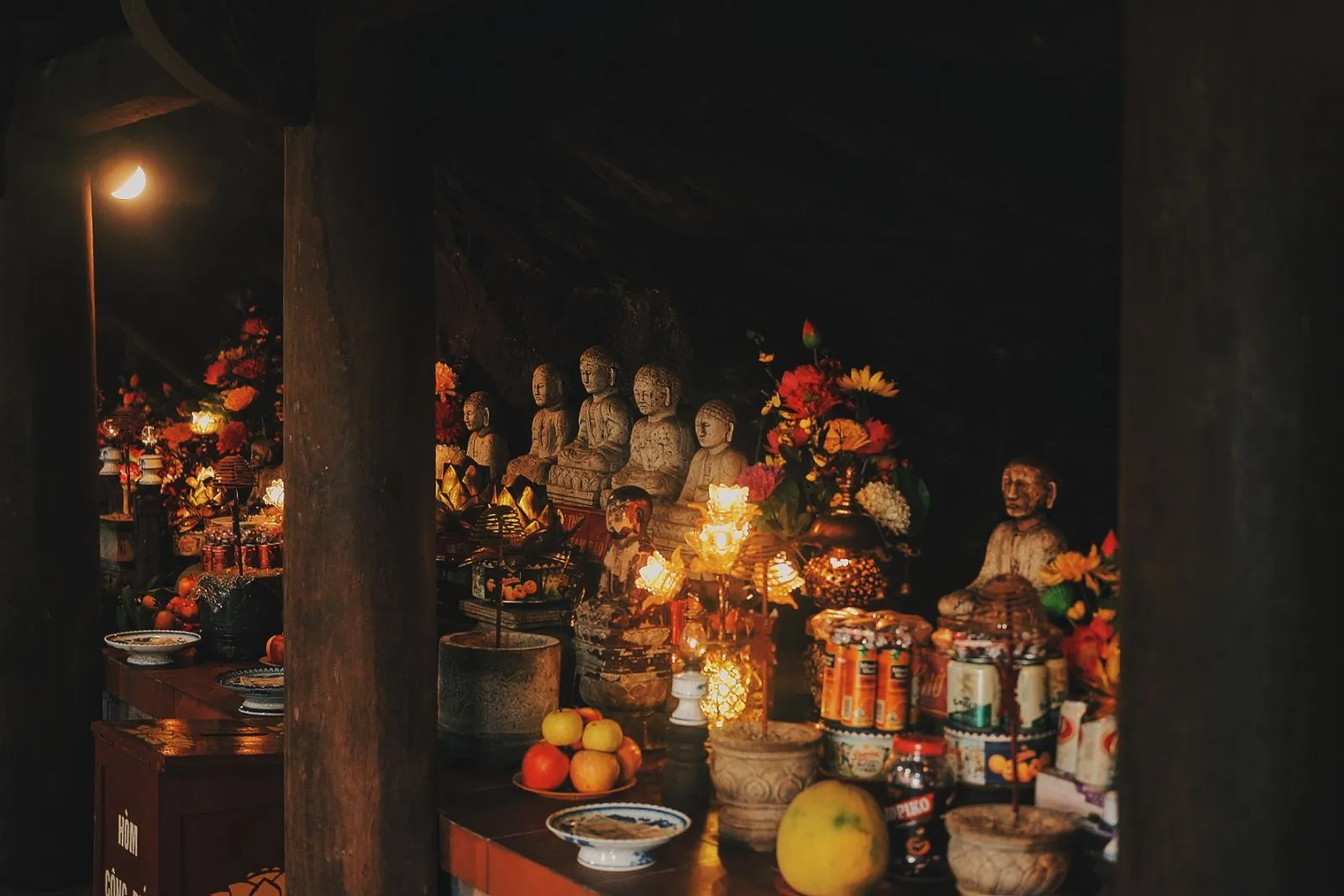
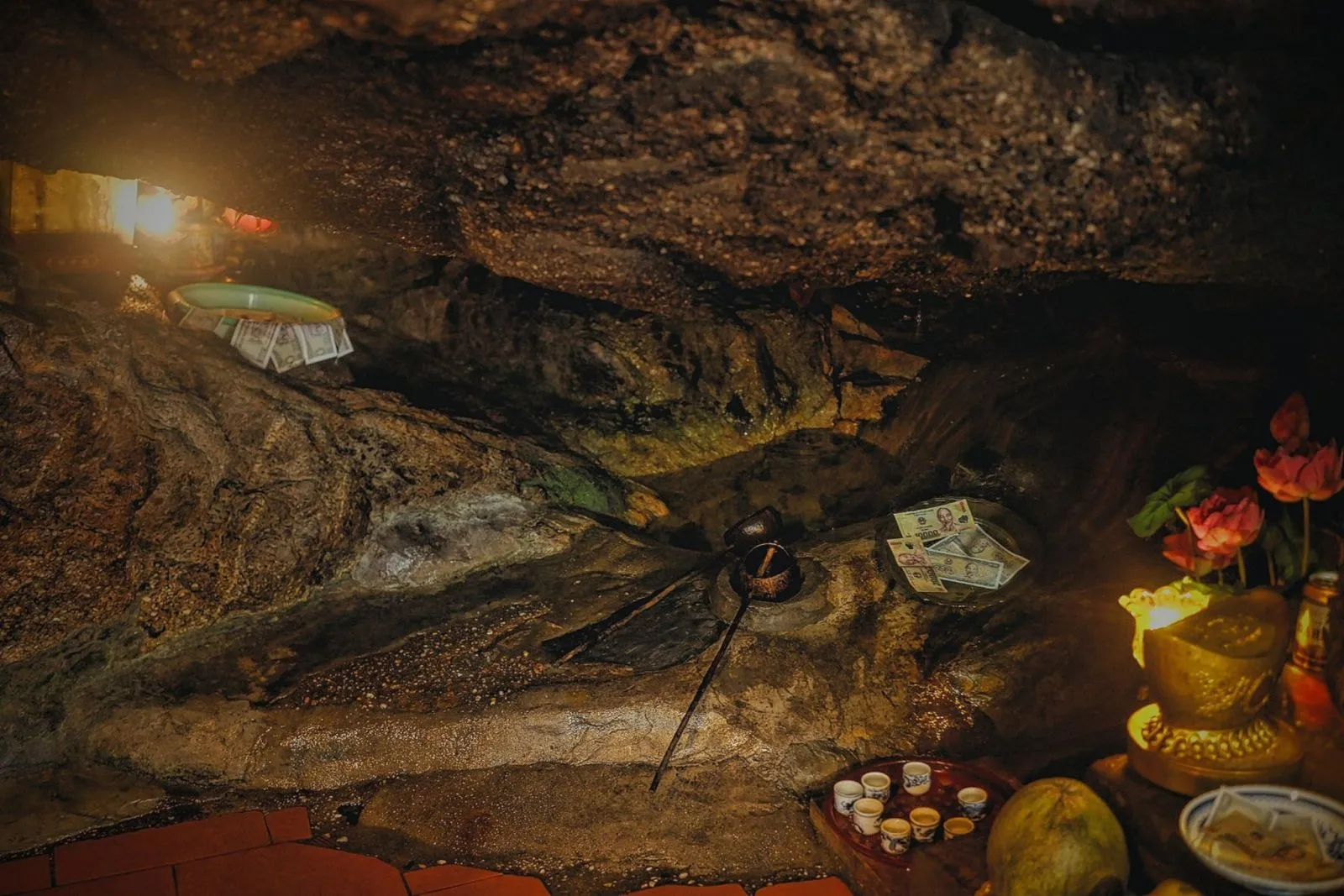
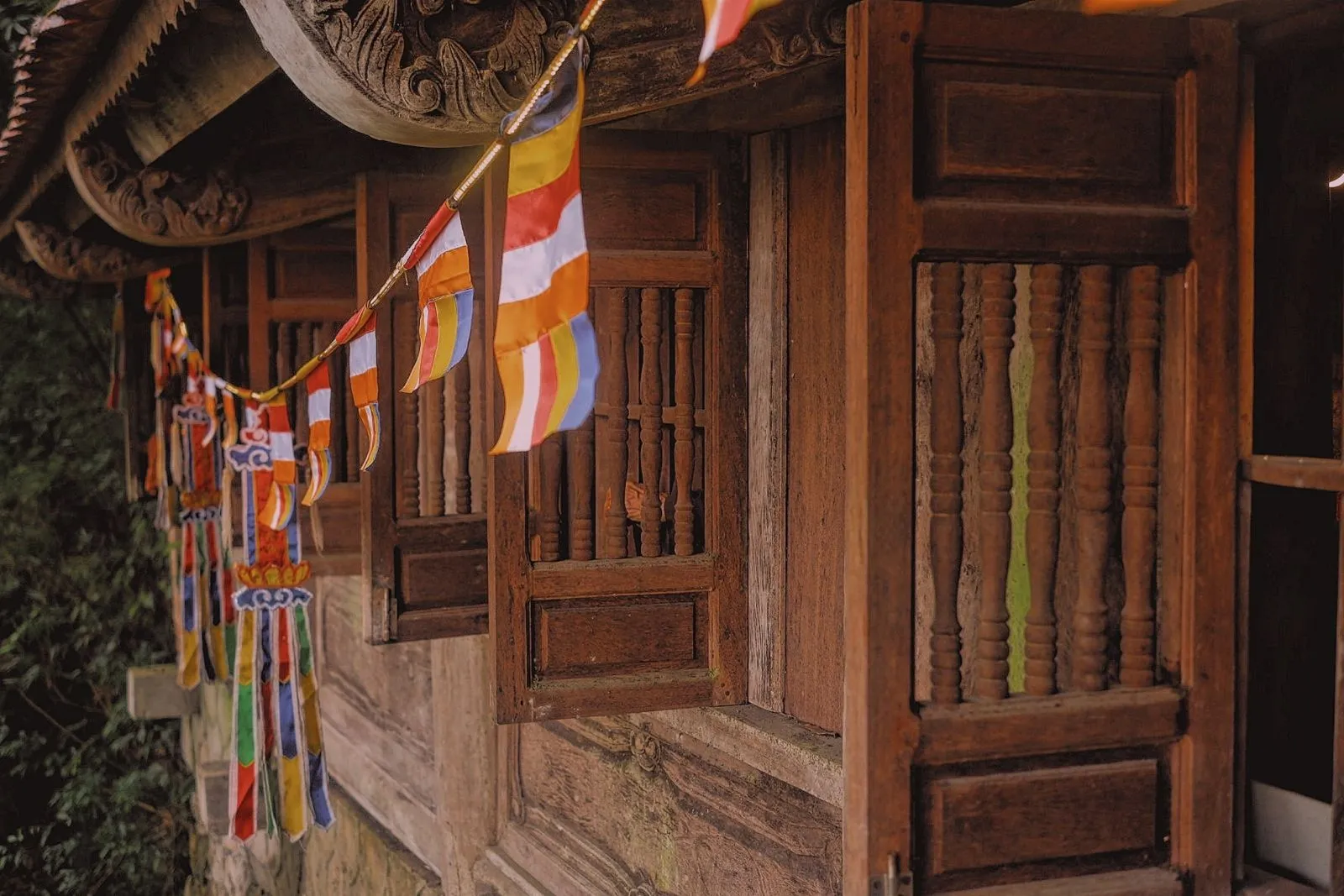
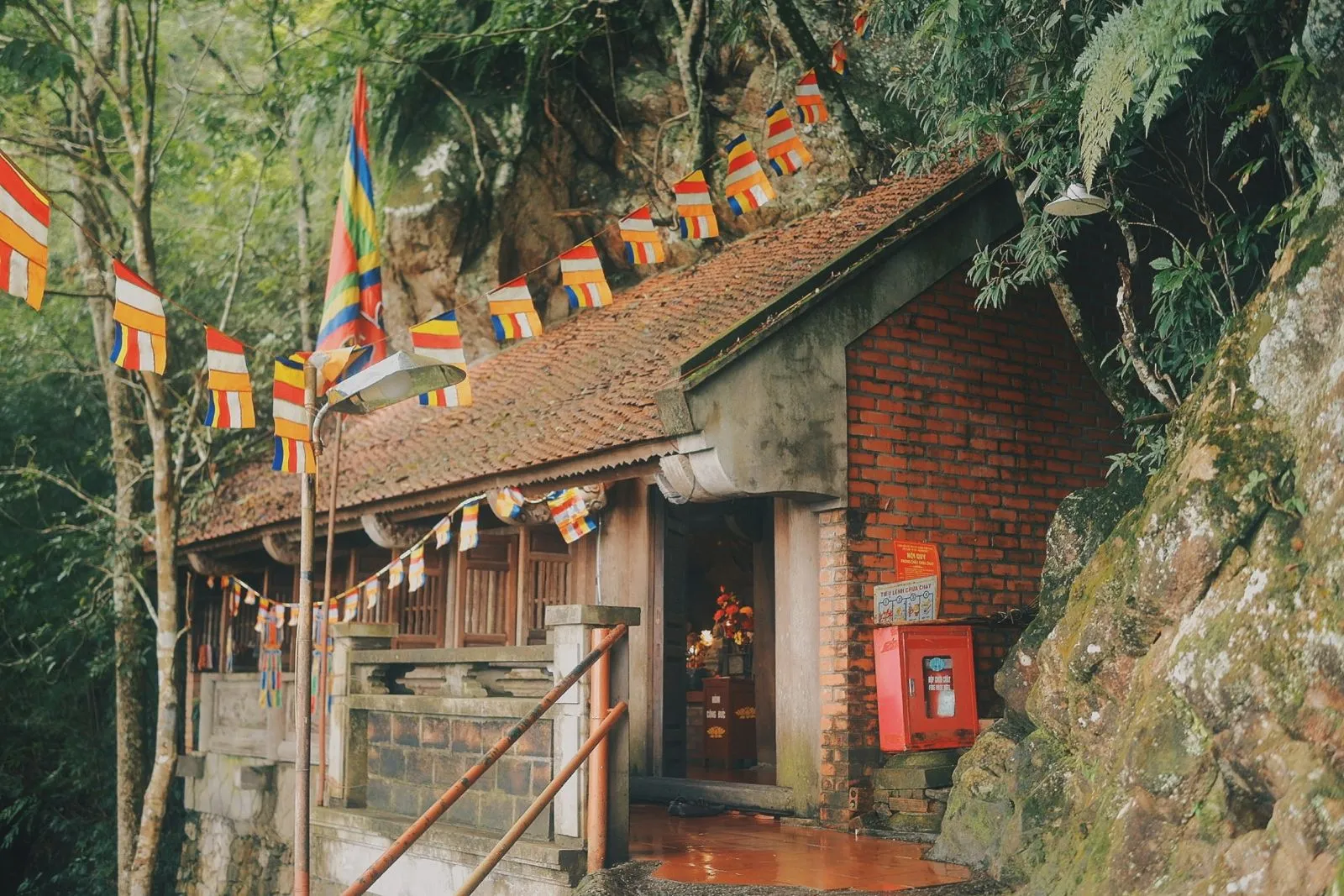
On the way further up, I stopped at Mot Mai Pagoda, the “One-Roof Pagoda.” Built partly into a cave, half of its roof is natural rock while the other half extends outward into the open air. Inside, ancient white stone statues from the late Le and early Nguyen dynasties still stand, weathered yet enduring. This was where King Tran once meditated and developed the philosophy of Truc Lam Buddhism: “The Buddha is within the heart. To live peacefully in harmony with life is to live in the Dharma.”
Here, silence lingers. A small nun cares for the temple, and drops of pure mountain water drip steadily into a stone basin, refreshing travelers with their cool clarity.
Reaching the Cloudy Summit
From Mot Mai, the final climb begins. The path winds upward through mist and pine until the sacred Dong Pagoda comes into view. Perched at the very peak of Yen Tu, this small bronze shrine is a place where heaven and earth seem to meet.
Standing there, surrounded by swirling clouds, I felt myself dissolve into the mountains, the sky, and the whispers of history. The long climb was not just a physical journey but a spiritual one—a search for stillness within.
The Timeless Spirit of Yen Tu
Every tree, every stone, every pagoda along the way carries stories of devotion, sacrifice, and enlightenment. Despite centuries of change, Yen Tu has preserved its essence as Vietnam’s spiritual heart.
To climb Yen Tu is more than a pilgrimage. It is a journey back to oneself, a reminder that amidst life’s impermanence, peace can always be found in the harmony of nature and the purity of the heart.
Recent Post
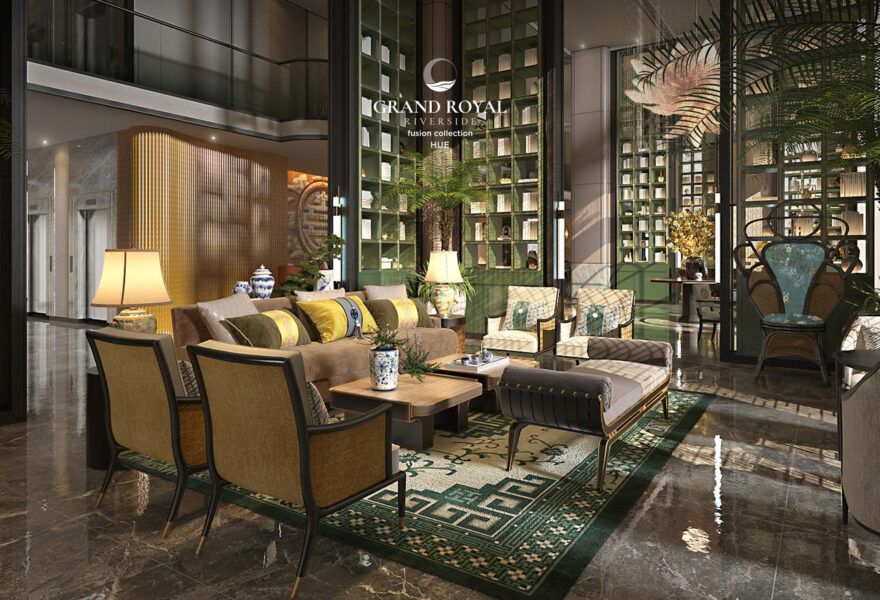
Fusion to Open Two Landmark Hotels in Hanoi and Hue in Early 2026
Fusion Hotel Group...

Nine Luxury Travel Experiences You Must Experience in 2026
The 2026 Luxe Repo...
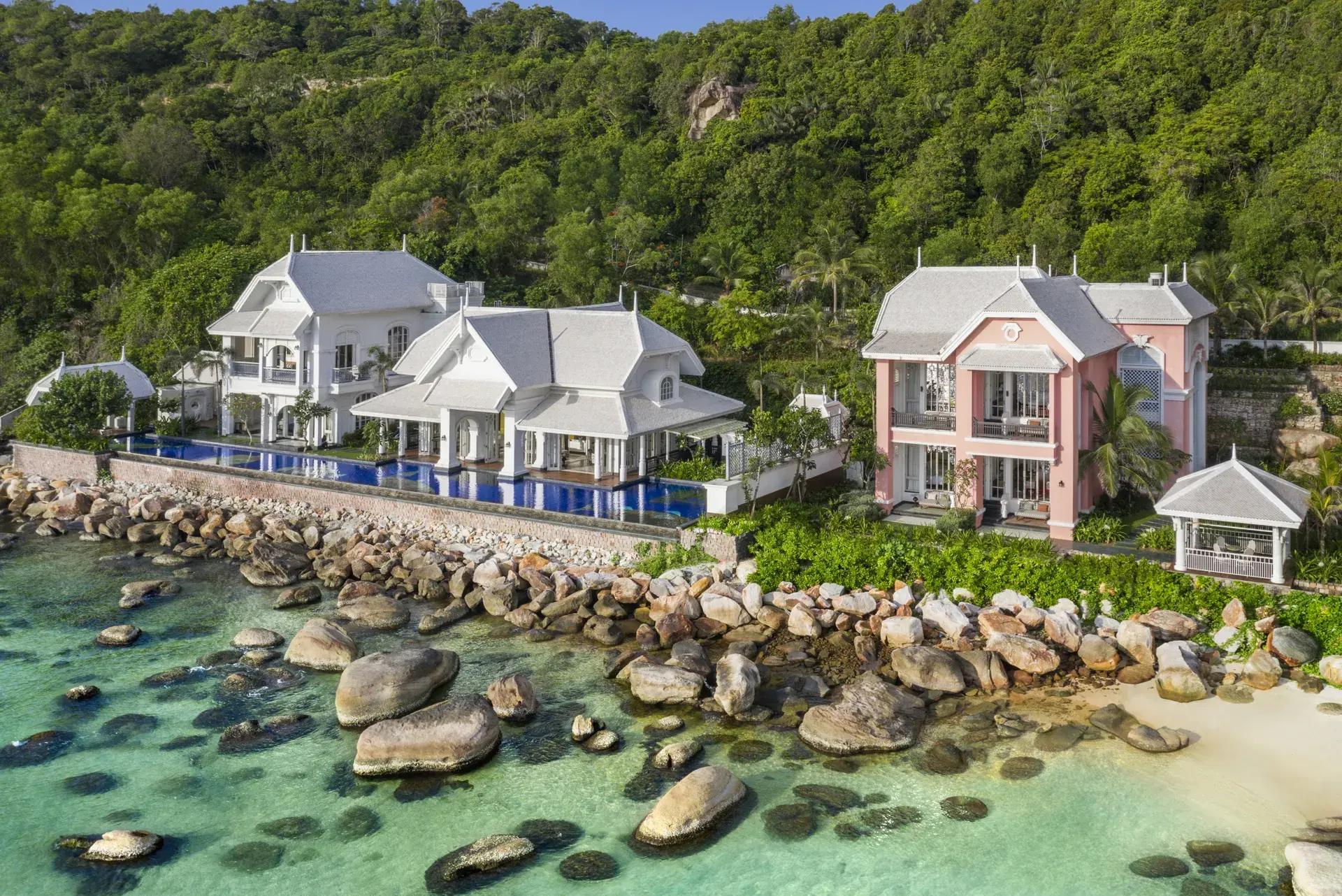
Nine Days of Renewal and Transformation at JW Marriott Phu Quoc
During the Lunar N...
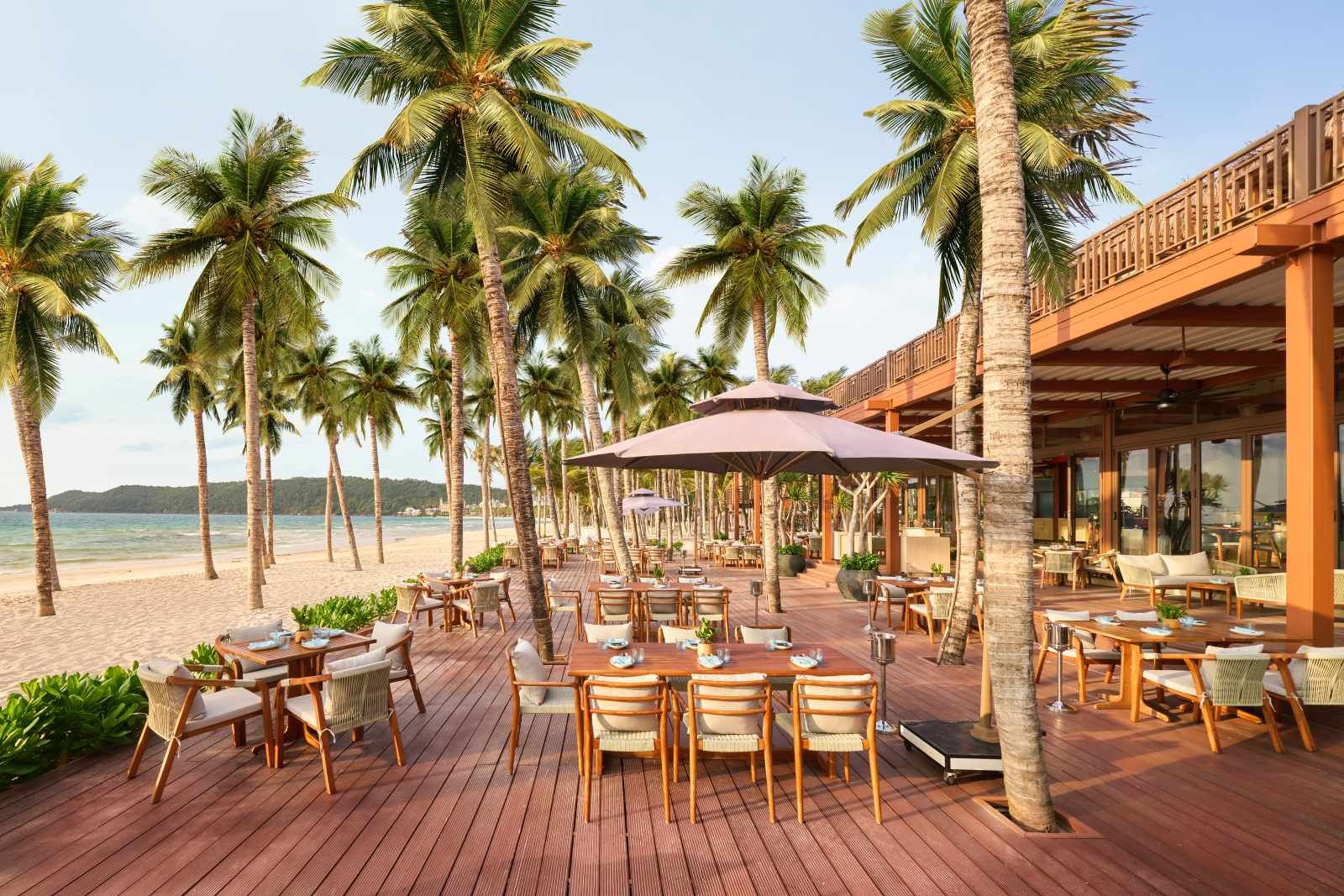
Top 3 All Inclusive Resorts Worth Experiencing in 2026
All inclusive holi...
All Inclusive A Curated Holiday in the World of Luxury
For a long time, a...