

Bánh Xèo – Crispy & Savory Vietnamese Crêpes/Pancakes
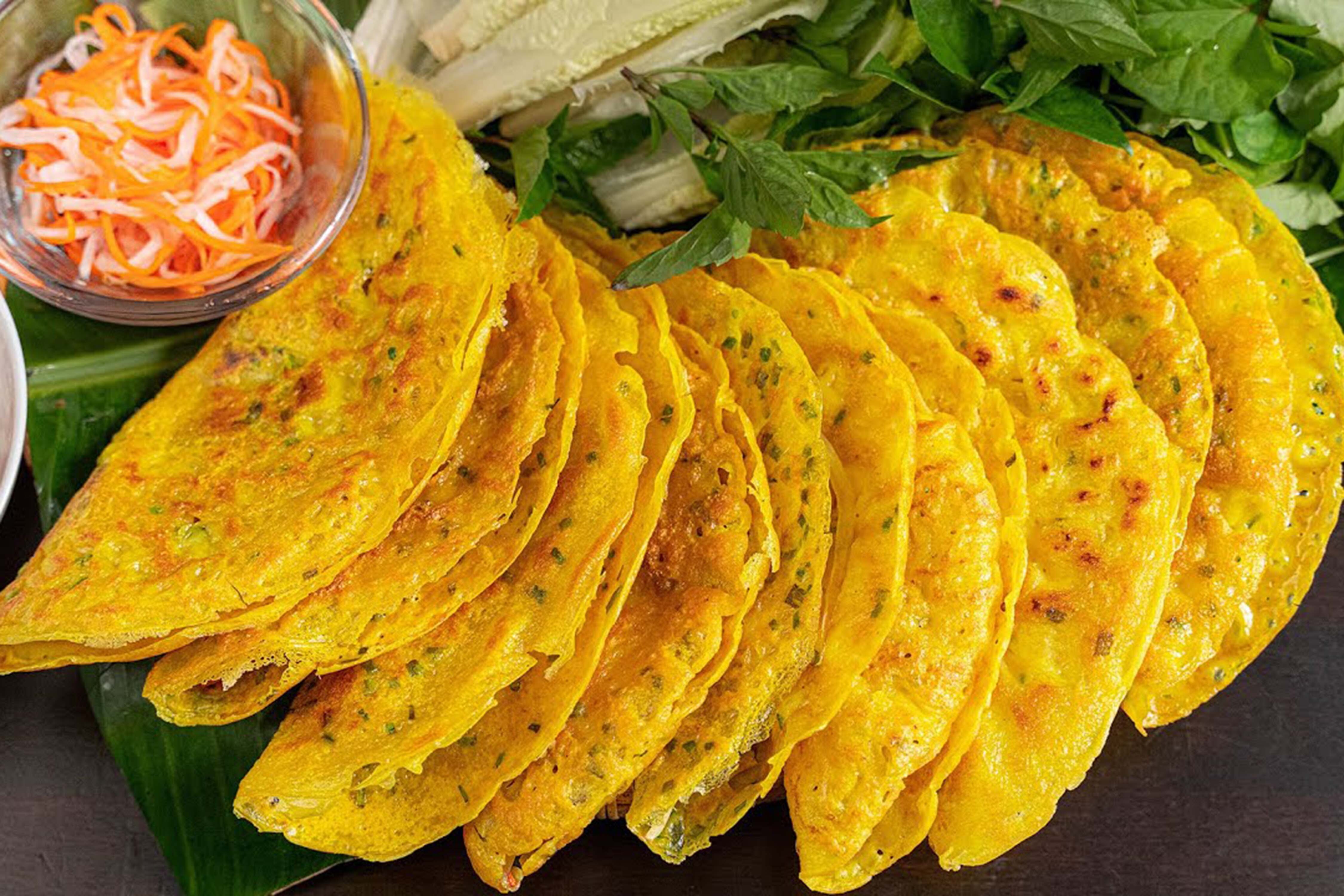
It’s got that irresistible crispy, yet delicate, golden brown crust. And the inside of the bánh xèo is filled with delicious flavors: pork and shrimp, and sprinklings of mung bean, onions and bean sprouts.
This crowd pleaser is a hot-off-the-pan, hands-on food meant to be wrapped in veggies and dipped in a flavorful dipping sauce. Vietnamese bánh xèo, sometimes called Vietnamese pancakes, or Vietnamese crêpes, are great for family style dinners and you can prep the batter a night ahead of time. Let’s get to sizzling!
Bánh xèo seems to be designed to be eaten as a family. The batter, filling ingredients, and veggies aren’t complicated to prepare, but they don’t make sense to be bought or made to be eaten by yourself.
You don’t just buy 1/4 pound of pork, 8 shrimps, or buy 1/4 head of lettuce. You kind of have to bump the volume to make each step worth the prep and to me, meals that are shared are a lot more fun anyway.
These crêpes take a little bit of prep time and organization, then you can just keep knocking these guys out faster than people can eat them.
What does bánh xèo mean?
I always found the name of bánh xèo interesting because the “xèo” is onomatopoeia for the sizzling sound it makes when you cook the batter. Its name loosely means “sizzling cake.” The Vietnamese language has a lot of playful and practical words like this which I love! This sizzling sound is much more obvious when the batter hits a hot pan in person, but here’s some footage of one hissing from the heat (turn the sound up!):
I’ve heard many folks refer to bánh xèo as that “Vietnamese egg dish” and it always took me a while to figure out what they were talking about, until they mention the filling has pork, shrimp, mung bean, bean sprouts and some green onion.
These crêpes are yellow and kinda look like omelettes but there are actually no eggs in this recipe. It’s just turmeric powder that colors them yellow!
Like just about every Vietnamese dish name, there is no direct English translation for the dish, except literal ones. The etymology, the meaning, and the word is deeply rooted in the culture, and it comes with a lot of context. So you can’t really say the name in English to a Vietnamese person and expect them to know, but some rough translations of bánh xèo can be: sizzling pancake, Vietnamese pancakes, or Vietnamese crêpes.
Using wheat AND rice flour
It’s been brought to my attention that when I write “wheat flour” it causes much confusion on my pandan waffle recipe, so lets clarify it for this recipe too! Wheat flour is what you’ve been buying all your life to bake cookies and bread, and it’s what grocery stores simply label as “all purpose flour.” The main reasy we specify it as wheat flour in recipes here is to differentiate from the rice flour. There’s many a strange rift created with us Americans and our food where we routinely buy and consume a product and not know what it’s truly made of and it’s reinforced by product labeling such as “all-purpose flour.”
Mom believes traditional bánh xèo was likely made with only rice flour and no wheat flour. If you want to go full on traditional, you can replace all of the wheat flour in the recipe with rice flour only and it will work. BUT…
Here’s why you want to use wheat flour:
- It makes the bánh xèo crispy in a different and better way in my opinion.
- It helps develop that nice brown color as it crisps up in the pan.
- And if you’re making the batter ahead of time and reheating it, the results turn out better if there’s wheat flour in it.
Troubleshooting the batter
The most common problem with the batter is that people aren’t getting it to crisp up. Here are the main things to check to help ensure crispy bánh xèo:
- Make sure the batter is not too thick. Whether or not you already measured out flour by weight, check for its consistency. When the recipe calls for you you pour some batter into the hot pan, and you tilt it around, the batter should freely flow and not feel like a thick pancake batter. If it’s too thick, thin the batter container out with a tablespoon of water, mix, then test. Repeat if necessary.
- Adjust your cooking times. The times I added in the recipe card are estimates that work for me, but everyone’s stove is different.
- Reduce the amount of the covered cooking time step. Sometimes if this lid-covered step goes on for too long, condensation can drip back into the pan, making it more difficult to crisp the bánh xèo.
- Increase the amount of time the batter cooks in the step after the lid is removed. This final step is uncovered, so steam can escape and the batter can crisp.
- Add more oil. During the final uncovered cooking step, not having enough oil can prevent batter and pan contact. You can brush on a little more oil around the edges if you think it’s not crisping enough.
- Double check the water and coconut cream measurements. Too much coconut cream can prevent the batter from crisping.
- Replace the water with carbonated water. For an extra boost, this can help. It’s not meant to fix the other issues that should be accounted for, but it can help in some cases.
- Try a different pan. A nonstick, or carbon steel, or cast iron pan with good coats of seasoning on them should work well. I haven’t completely narrowed it down on why some pans simply fail, but would guess that the ones causing issues are ones that are too light or not transferring heat evenly.
Recent Post

Fusion to Open Two Landmark Hotels in Hanoi and Hue in Early 2026
Fusion Hotel Group...

Nine Luxury Travel Experiences You Must Experience in 2026
The 2026 Luxe Repo...

Nine Days of Renewal and Transformation at JW Marriott Phu Quoc
During the Lunar N...

Top 3 All Inclusive Resorts Worth Experiencing in 2026
All inclusive holi...

All Inclusive A Curated Holiday in the World of Luxury
For a long time, a...